
How to Play Poker
Poker is the odd one out. Every other game on this site is you against the house, with a fixed edge you cannot move. In poker you are playing the other people at the table, and the house takes a small cut called the rake.
That means skill genuinely decides who wins over time. It also means someone at the table is losing, and if you cannot tell who, it is probably you.
The hand rankings
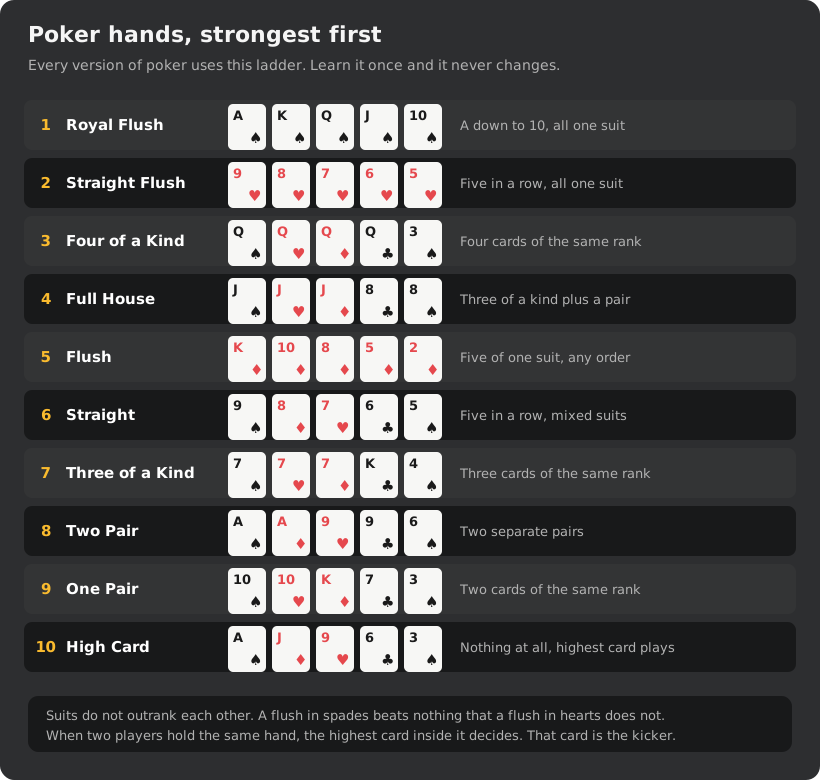
Learn this before anything else. Every decision in poker is a comparison against this ladder, and you cannot make a sensible one without it.
Two things that trip up new players: suits do not outrank each other — a flush in spades is worth exactly what a flush in hearts is worth — and when two players hold the same hand, the highest unmatched card decides. That card is called the kicker.
How a hand of Texas Hold’em runs
Hold’em is the version you will meet almost everywhere.
- Two cards are dealt face down to each player. These are yours alone.
- Pre-flop. First round of betting.
- The flop. Three shared cards are dealt face up. Betting round.
- The turn. A fourth shared card. Betting round.
- The river. A fifth shared card. Final betting round.
- Showdown. Anyone still in makes their best five-card hand from their two cards and the five shared ones.
You can win without ever showing your cards, if everyone else folds. That happens constantly, and it is most of the game.
Position is worth more than cards
Acting last in a betting round means you have watched everyone else act before you decide. That information is worth real money over time.
The same two cards are a fold in early position and a raise on the button. Players who ignore this and play every hand the same way from every seat lose steadily without ever understanding why.
If you learn one thing beyond the rankings, learn to play fewer hands from early seats and more from late ones.
The rake, and what it means for you
The house does not bet against you in poker. It takes a percentage of each pot, usually capped — that is the rake. In tournaments it is a fee on top of the buy-in.
The practical effect: the table as a whole always loses slowly. For you to win, you have to beat the other players by more than the rake takes. At small stakes the rake is a large share of the money, which is why breaking even there is harder than it looks.
Where new players lose money
- Playing too many hands. Most starting hands are not worth entering a pot with. Folding is a normal action, not a wasted turn.
- Chasing draws that do not pay. If the pot is not offering you enough to justify the chance of completing, folding is correct even when the draw is pretty.
- Staying in because you already paid. Money in the pot is not yours any more. Only the next decision matters.
- Playing tired or tilted. Poker punishes emotional decisions faster than any other game here, because your opponents benefit directly.